
Chronic Achilles Ruptures
It happened some time ago…….
Chronic Achilles Tendon Rupture
Restoring strength after a missed or longstanding Achilles tear
An Achilles injury may become less painful yet leave you with a limp, a weak push-off or difficulty standing on tiptoe. Sometimes the rupture was missed initially. In other cases, the tendon has healed in a stretched position or ruptured again.
I assess and treat chronic Achilles tendon ruptures in Melbourne and Ballarat. Treatment may involve rehab and bracing, or surgery to repair or reconstruct the tendon. For suitable cases, minimally invasive or keyhole techniques may be an option.
What is a chronic Achilles rupture?
An Achilles rupture is commonly described as chronic when diagnosis or treatment has been delayed beyond six weeks. The condition of the tendon matters as much as the time since injury.
The torn ends can pull apart, scar tissue may fill the gap, and the calf can become weaker. Sometimes the tendon becomes continuous but too long to transmit the calf muscle’s force effectively.
This explains why an older rupture may need reconstruction rather than a straightforward repair.
What symptoms should I look for?
Common symptoms include:
Weakness when pushing off during walking.
Difficulty climbing stairs, walking uphill or walking quickly.
Difficulty raising your heel while standing on the affected leg.
A persistent limp, poor balance or early calf fatigue.
A smaller calf muscle compared with the other side.
Swelling, thickening or discomfort around the tendon.
Being able to walk or point your foot downwards does not rule out an Achilles rupture. Other muscles can still produce some of these movements. Pain may also become less noticeable while weakness persists.
How do I assess the injury?
I examine your walking pattern, calf strength, tendon tension, skin, circulation and sensation, comparing both legs. Ultrasound or MRI may help assess tendon continuity, the gap, scar tissue and muscle quality. Sometimes I even use X-rays.
We also discuss what you want to regain, whether that means walking comfortably, managing stairs, returning to physical work or playing sport. Thinking about what your functional limitations can be key to solving this problem.
Can a chronic Achilles rupture be treated without surgery?
Yes, nonoperative treatment can be appropriate for selected patients. I consider your current function, the age and appearance of the rupture, your goals and the risks of surgery.
It may be particularly suitable when everyday function is acceptable, activity demands are lower, medical or skin problems increase surgical risk, or you prefer to avoid an operation.
Treatment may include:
A protective boot: In selected delayed presentations, a boot with heel wedges or an adjustable ankle position may support a supervised rehabilitation programme.
Physiotherapy: Progressive strengthening, walking retraining and balance exercises help improve function.
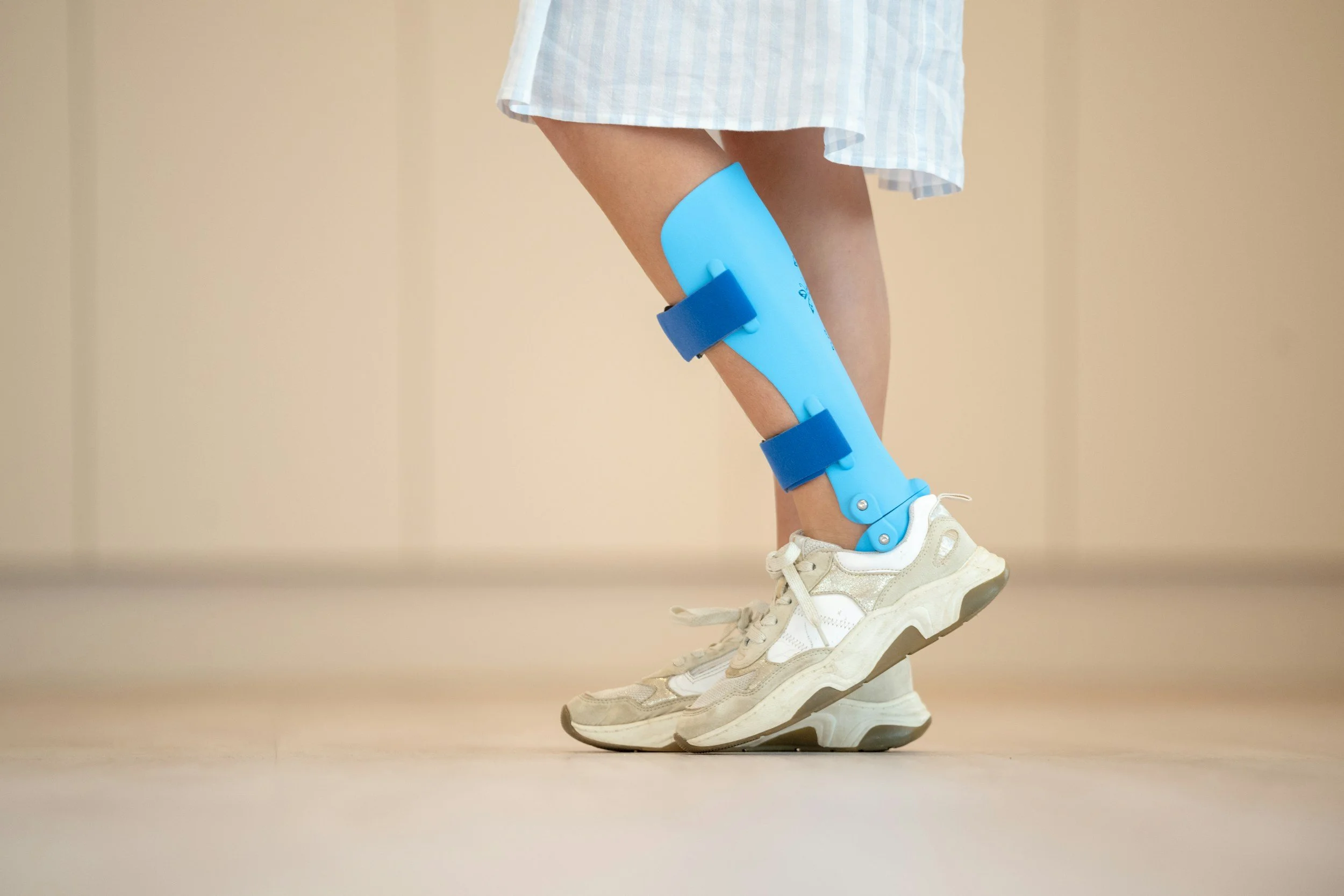
Bracing: An ankle brace or ankle-foot orthosis may improve walking when substantial weakness remains. The mainstay orthotic for chronic Achilles ruptures is the GRAFO (Ground-Reaction-Ankle-Foot-Orthotic)
Footwear and activity changes: Supportive shoes and adjustments to activity may make daily life more manageable.
A boot will not reliably shorten a longstanding, elongated tendon in the chronic setting. Nonoperative care may improve function without restoring normal push-off strength.
Small studies report improvement with structured nonoperative treatment, but evidence for chronic ruptures remains limited. Results from fresh Achilles tears should not automatically be applied to longstanding injuries. These are different things.
When do I start thinking of surgery?
I discuss reconstruction when weakness, limping or difficulty with everyday activities remains unacceptable, particularly when the tendon is substantially elongated, separated or of poor quality.
Previous unsuccessful treatment or a re-rupture may also make surgery worth considering.
The decision depends on your function and goals, alongside the risks and commitment to rehabilitation. A scan showing a tear does not, by itself, mean that you need surgery.
How do I repair or reconstruct a chronic Achilles rupture?
The aim is to restore an effective connection between the calf and heel, with appropriate tendon length and tension.
Direct repair
If the gap is small and the remaining tendon is healthy enough, the ends may be brought together and repaired. This is less often possible in longstanding tears.
Tendon advancement or local tissue reconstruction
Sometimes the calf’s tendon tissue can be advanced or used as a flap to bridge a defect. These techniques may require a larger incision.
Tendon transfer
A nearby functioning tendon can be redirected to help replace or reinforce the damaged Achilles. A commonly used option is the flexor hallucis longus, or FHL.
Tendon graft reconstruction
Larger defects may require a graft, such as a hamstring tendon from your own leg. Donor tendon tissue may be considered in selected situations.
The choice depends on the gap remaining after unhealthy tissue is removed, tendon quality, calf function, skin condition and previous surgery. sometimes, several techniques may be combined.
What is an FHL tendon transfer?
The flexor hallucis longus is a muscle and tendon that normally helps bend the big toe. It lies close to the Achilles and also helps point the foot downwards.
During transfer, the tendon is redirected and secured to the heel bone to provide another source of power. Depending on the injury, the remaining Achilles tissue may also be repaired or incorporated into the reconstruction.
An FHL transfer can be useful when the original tendon is too damaged or shortened for a dependable direct repair.
Will it affect my big toe?
Some loss of strength when bending the end of the big toe can occur. Many patients notice little difficulty with ordinary walking, but this trade-off deserves particular discussion for activities requiring powerful toe push-off or fine foot control. Most people don’t have a problem with this. Moreover the big toe has a second tendon that usually does the rest of the work when the FHL is redirected to the heel.
Can I have minimally invasive or keyhole surgery?
Some chronic Achilles ruptures can be treated through smaller incisions or with endoscopic assistance.
For some sitiuations, I would consider:
Endoscopic FHL transfer: A small camera and instruments help prepare and transfer the tendon through small incisions around the back of the ankle.
This aims to limit disturbance of the skin and surrounding soft tissues. Published case series report encouraging results, although they do not establish that keyhole surgery is best for every rupture.
Smaller incisions still require healing and rehabilitation. Nerve injury, infection and other complications remain possible. I choose the approach that allows the reconstruction to be performed safely and effectively.
What are the risks of reconstruction?
Risks depend on your health and the procedure, and include:
Wound breakdown, delayed healing or infection.
Nerve injury, numbness or persistent pain.
Blood clots in the leg or lungs.
Re-rupture, graft or fixation problems, or tendon stretching.
Persistent weakness, stiffness or reduced endurance.
Weakness or discomfort at a tendon transfer or graft harvest site.
Complex regional pain syndrome.
Further surgery.
Your skin condition, circulation, smoking history and diabetes control form part of planning treatment.
What does recovery involve?
This really depends on the person, type of rupture, and type of procedure. very specific. Chronic Achilles reconstruction needs an individual rehabilitation plan. Instructions for a fresh rupture may not suit a tendon transfer or graft reconstruction.
I provide guidance on boot position, heel wedges, weight bearing and physiotherapy. Clot prevention is assessed individually.
Avoid forceful calf stretching or dropping your heel below a step until specifically cleared. Progress depends on the wound, reconstruction, strength and walking pattern.
How long until I can walk normally or return to sport?
Recovery takes months. Returning to comfortable daily activities usually comes before regaining powerful push-off or sporting endurance.
Running and jumping require adequate strength and control. Higher-demand sport may take around 12 months or longerafter reconstruction, and some patients do not regain their previous sporting level.
Calf weakness and reduced heel-rise performance can remain at one year, even after successful surgery. My aim is to set realistic goals and guide steady progress rather than promise a particular recovery date.
Having said this, there are some studies demonstrating earlier recovery with keyhole FHL transfers and some of my patients are very happy with this. -But I reckon this is still in its early stages, with limited results.
Is it too late if the rupture happened months ago?
A delayed diagnosis does not mean there are no treatment options. Rehabilitation, bracing or reconstruction may still help.
If you continue to limp, struggle to push off or cannot raise your heel on the affected side, an assessment can clarify the problem and the available options.
Chronic Achilles rupture assessment in Melbourne and Ballarat
I am happy to see patients with missed Achilles tears, longstanding ruptures, re-ruptures and persistent weakness after previous treatment.
Please bring your referral, any ultrasound or MRI reports and images, and details of earlier treatment.
Book a consultation to discuss nonoperative care, tendon reconstruction and whether a minimally invasive approach is suitable for your injury.
This page is for general information. Your treatment and rehabilitation instructions will be tailored to your injury and health.